Why I Do This

When I first got certified as a Nutritional Therapy Practitioner, I wrote a careful little code of ethics. It leaned on the Nutritional Therapy Association's official version, it was respectful of conventional medicine, and it was honest. I meant every word at the time.I'm rewriting it now because I'm not that person anymore. Not because I abandoned my principles — because I lived a few more years, worked inside the system, watched what it did to people I love, and stopped pretending I didn't see it.This is what I actually stand for now.
How I got here
I came to nutrition the long way. I spent years in IT, where the rule was simple: if you only treat the symptom, the system breaks again next week. You have to find the root cause. When my own health turned around on real food after years of being told to "just manage it, that is normal" I went and got the NTA training so I could understand why. Then I practiced and after a few years I hit a wall. Recommendations that were genuinely helping people kept getting overruled by doctors working from a completely different playbook. At first I thought that was the whole problem — turf. It wasn't. I worked for a major pharmaceutical company and saw the deceit up close: how data gets framed, how bad results get quietly omitted and how incentives drive "the science", how the goal is too often the next prescription, not a well person. I watched the school system fail my son with autism — plenty of labels and procedures, almost no real help. The pattern was the same everywhere I looked: a system that's very good at protecting itself and very bad at making people well.The NTA gave me the tools to look under the hood. Once you see it, you can't unsee it.
What I believe now
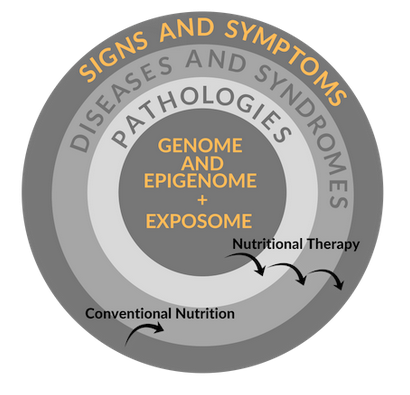
Natural and alternative first. Food, sunlight, sleep, movement, minerals, real fats, and removing what's poisoning us — that's where I start, every time. Not as a last resort after the drugs fail, but first, because that's where the root cause usually lives. Conventional medicine is one tool in the box. It is extraordinary for acute emergencies and trauma. It has largely failed at chronic disease — the diabetes, the autoimmunity, the gut problems, the metabolic wreckage — because it manages symptoms for life instead of fixing causes.
Disease is a label — and the labeling is rigged. A "disease" name is just a tidy box for a set of signs and symptoms. That's all it is. And I've come to believe the whole naming system is broken on purpose, because a named, managed, lifelong condition is far more profitable than a healed person. Strip the labels away and it gets simple: I believe almost every chronic disease comes down to three things — toxins, nutritional deficiencies, or physical trauma. Poison the body, starve it of what it needs, or injure it, and it breaks down in predictable ways we then give fancy names to. The hopeful flip side is this: give the body what it actually needs and remove what's poisoning it, and it will do exactly what it was built to do — heal itself. You don't fix a deficiency or a toxin with a drug that addresses neither. And if you doubt how much of this is man-made, look back 100 to 150 years — many of the conditions that kill the most people today were rare or unheard of. Our genes didn't change that fast. Our food, our chemicals, and our environment did.
Your body, your choice. I believe in medical freedom and informed consent — really informed, not a pamphlet full of words no one understands. You have the right to ask what's in it, who profits, what the actual evidence is, and to say no. One-size-fits-all mandates ignore the most basic truth in all of health: people are bio-individual. What's right for one body isn't automatically right for yours. Follow the incentives, ask the questions, decide for yourself. That isn't dangerous — that's being an adult about your own health. No matter how many degrees hang on the wall, no one knows more about your body than you do. If your doctor pushes back on that, you need a new doctor. In my opinion, switch from an M.D. to an N.D. (Naturopathic Doctor) — or at least a D.O. (Osteopath).
I'll show you my reasoning, not just cite an authority. I care about evidence more than ever. But "evidence" is not the same as "a journal said so" — a lot of published research is shaped by who paid for it. So when I make a claim, I'll show you the mechanism, the actual physiology of why something works, and I'll lean on the kind of evidence that predates the modern journal: how traditional cultures ate and lived, what Weston A. Price documented in healthy populations, what consistently works in real people. Biology and primary data over press releases and guidelines. You should be able to follow the logic and check my work.
Your experience is real evidence. Conventional medicine waves anecdotal evidence away as worthless. For the individual, that's exactly backwards. On a personal level, anecdotal evidence is the most valuable evidence there is. It's how human beings have always made decisions: you ask a friend what worked for them, you try the remedy your grandmother passed down, you notice you feel better when you eat a certain way. A randomized trial tells you what happened to a statistical average. Your own experience — and the lived experience of people you trust — tells you what happens to you. You are not a study average. When something works for you, that isn't "just anecdotal." That's your body healing itself after you gave it what it needed. This is not worthless, this is traditional wisdom.
I'll be honest about what I am. I'm a Nutritional Therapy Practitioner. I'm not a medical doctor — and I don't want to be one, because I think the framework most of them are trained in is the problem. I can teach you how the body works, how food heals, and how to think for yourself about your health. I can't diagnose you, and I won't pretend to. Being clear about that line is part of being trustworthy.
Medical freedom is about informed choice, not recklessness. If you're having a heart attack, a stroke, a serious injury, a true emergency — get help immediately. Acute and trauma care is the one thing the conventional system does brilliantly, and I'll never tell you otherwise. My lane is the long game: the foundations of health — digestion, blood sugar, fats, minerals — the root-cause work that keeps you out of that emergency room in the first place.
My mission is to empower you. I'm not here to build a following or sell you the supplement of the month. I'm here because real food and ancestral wisdom healed my health issues I'd been told to live with — and I want that for you. I want you to stop outsourcing your health to a system that profits when you stay sick.
In plain English
I trust food more than the food pyramid. I trust your grandmother's kitchen more than a cereal box's health claim. I trust biology more than a guideline written by a committee with a sponsor. I'll always tell you what I am and what I'm not, I'll always send you to the ER for a real emergency, and I'll always show you my reasoning so you can decide for yourself.I got into this work because I was failed, and then I got better — and then I watched the same system fail my own son. I'm done being quiet about it. The journey continues, and now you know exactly where I stand.